Nothing beats the flavor of a freshly picked strawberry from your own garden. But growing them – from seed, bare root or otherwise – requires patience and care.
Understanding this plant’s life cycle can help you give it everything it needs to produce delicious fruit season after season.
After all, the strawberry life cycle extends beyond the growing season. It spans the entire year and repeats annually.
Let’s take a closer look at each stage of the growth journey.
The Complete Life Cycle of a Strawberry
1. Seed Germination
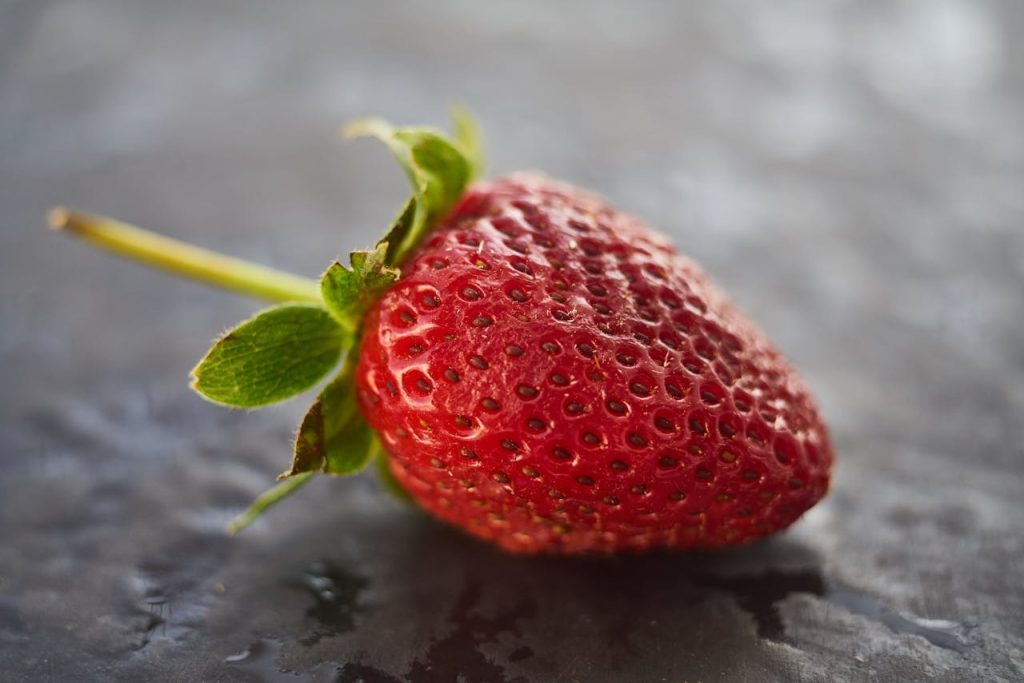
Growth starts either from seed or from runner plants. The seeds of a strawberry plant are actually found on the outside of the fleshy red part. These miniature hard specks, which are smaller than a pinhead, hold all of the genetic material necessary to grow a new strawberry plant.
Once a seed sprouts, roots are sent down into the soil.
Germination tends to be more successful when seeds are:
- Fresh (just 1-2 years old)
- Given some time in cold conditions (such as your fridge) for about 30 days
- Given 6+ hours of sunlight daily
- Kept moist
Patience is one thing every gardener needs when growing strawberries from seeds. They’re notoriously slow and unpredictable at times.
It can take 3-4 weeks just for the seeds to germinate. New leaves should start to emerge after 2-3 more weeks.
2. Vegetative Growth Stage
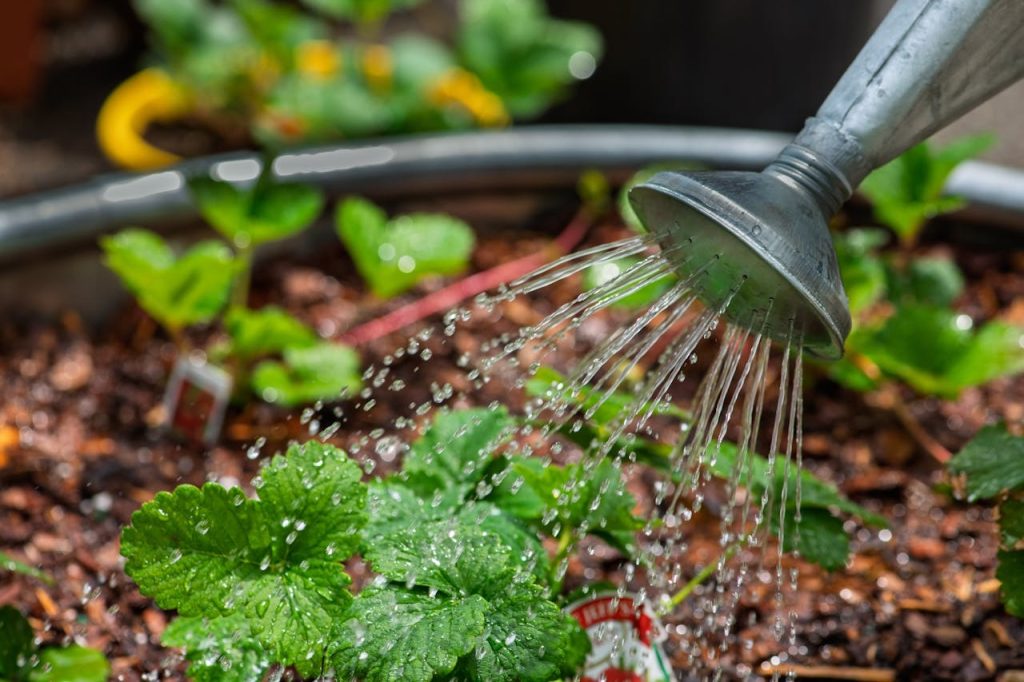
As your seedlings grow, the plant focuses heavily on growing leaves and shoots. These leaves are essential for photosynthesis, which is how the plant creates the food and energy it needs for its growth.
At the same time, the plant pushes its roots deeper and wider into the soil, allowing it to absorb vital nutrients.
Strawberry plants grow from a dense crown that sits at the base of the soil. All of the plant’s leaves, runners and roots grow from this crown.
Runners are how the plant reproduces. They extend several inches from the crown and then take root in the soil to produce new plants, called “daughter” plants.
These are how strawberries spread naturally.
3. Flowering Stage
It can take anywhere from a few weeks to a few months for strawberry plants to flower, depending on the variety.
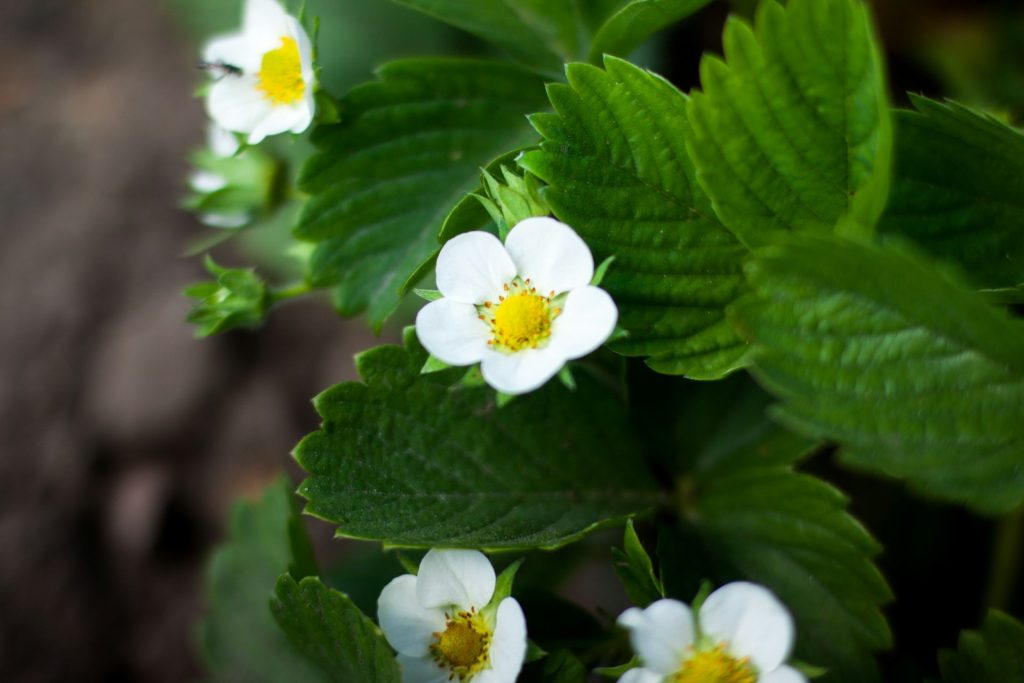
Strawberries produce white, yellow-centered flowers, which contain both male parts and female parts.
- Male parts are called stamens, and they produce pollen
- Female parts are called pistils, and they receive pollen
Generally, strawberry plants are self-pollinators – they contain both male and female parts. But for the tastiest and largest fruit, pollination by insects like bees is essential.
Well-pollinated flowers create large, uniform berries. Poor or incomplete pollination creates misshapen berries or small fruit.
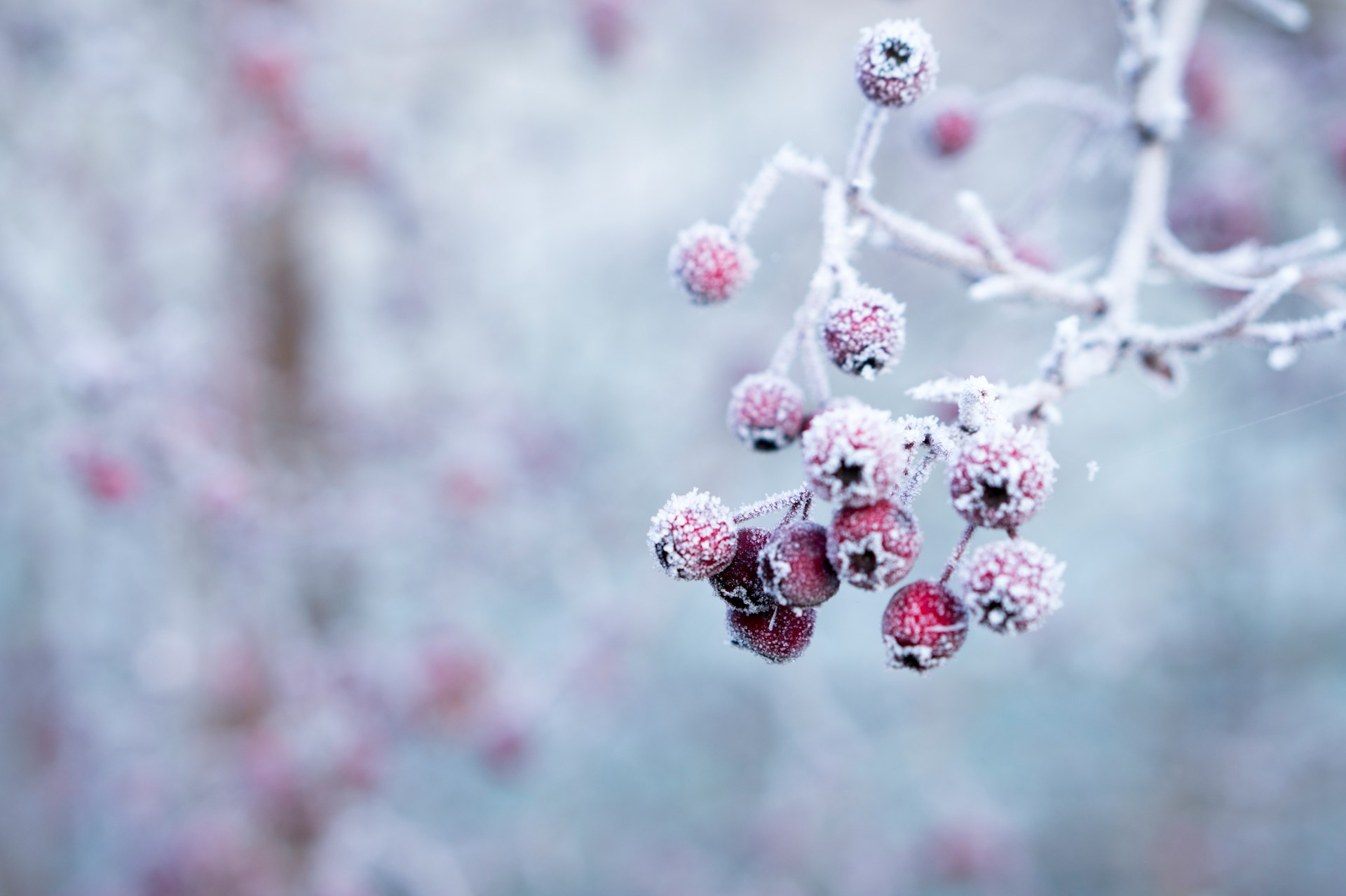
The flowers are the most vulnerable part of the plant to environmental stress. Frost can actually kill the flower buds, which can lead to the loss of the entire potential fruit for the flower stalk.
Alternatively, high temperatures can reduce fruit size and quality.
4. Fruit Development
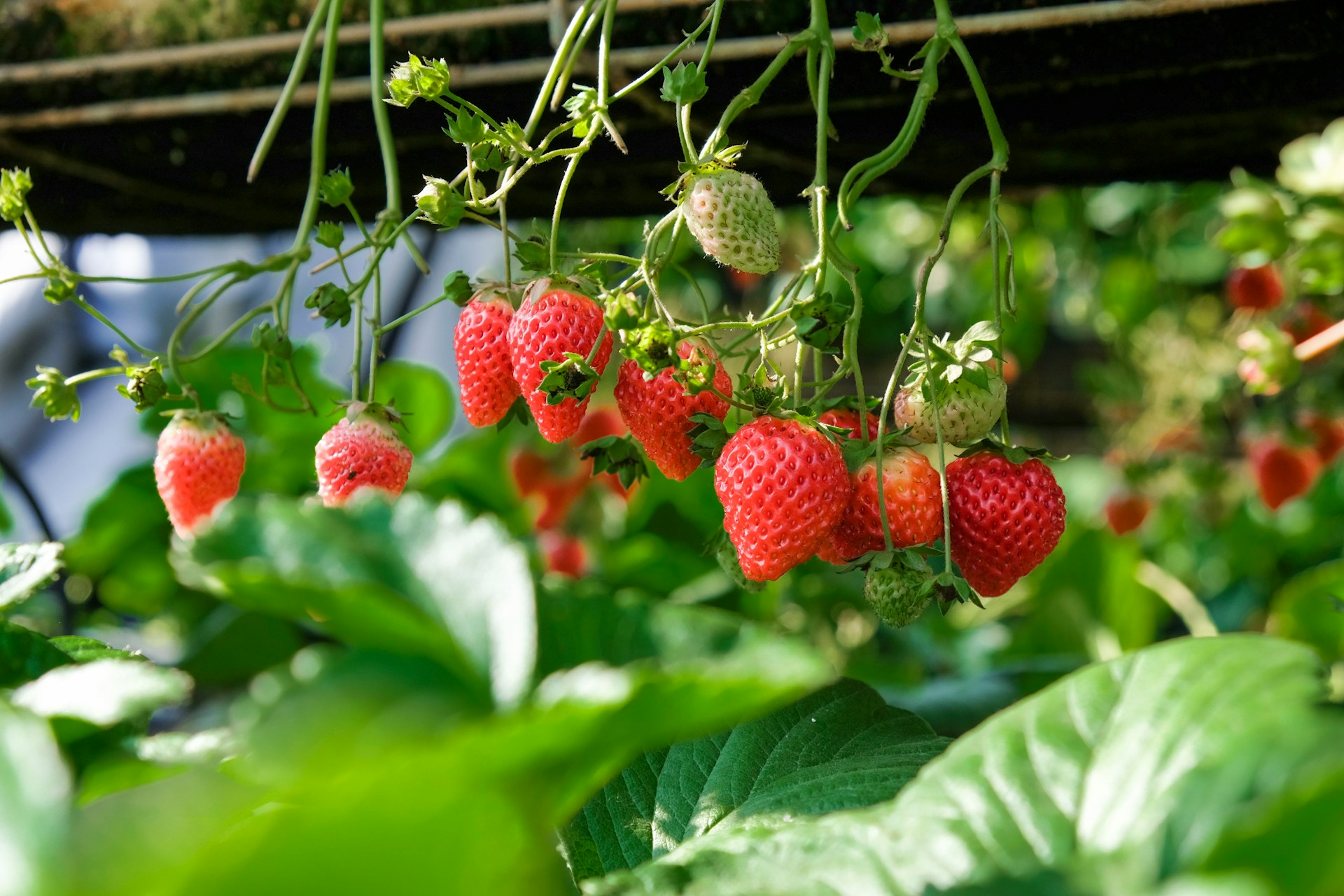
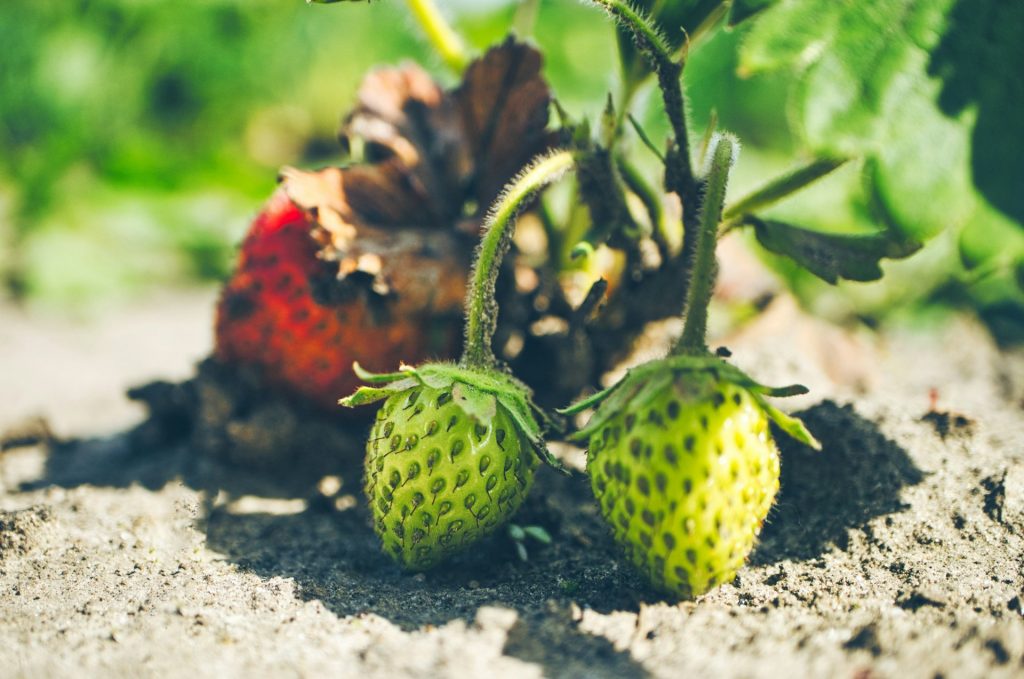
The fleshy edible part of the plant (the strawberry you know and love) is actually the part of the flower that holds the ovaries. Once pollination completes, the receptacle swells and changes color.
It starts out as a small white/green berry and transforms over time into its characteristic red color. As the fruit ripens, it becomes sweeter as the starches are converted to sugars.
Strawberry sizes and sweetness are affected by a few different factors:
- The variety: Some types naturally produce large berries.
- Sunlight: At least 6-8 hours of direct sunlight is needed for the best fruit.
- Water: Consistent moisture is needed, but overwatering can cause watery or malformed fruit.
- Nutrients: They need sufficient potassium and phosphorus to support fruit size.
5. Fruit Maturation and Harvest
It takes about 3-5 weeks for strawberries to ripen after the flower is successfully pollinated.
But how do you know when a strawberry is ready to be picked?
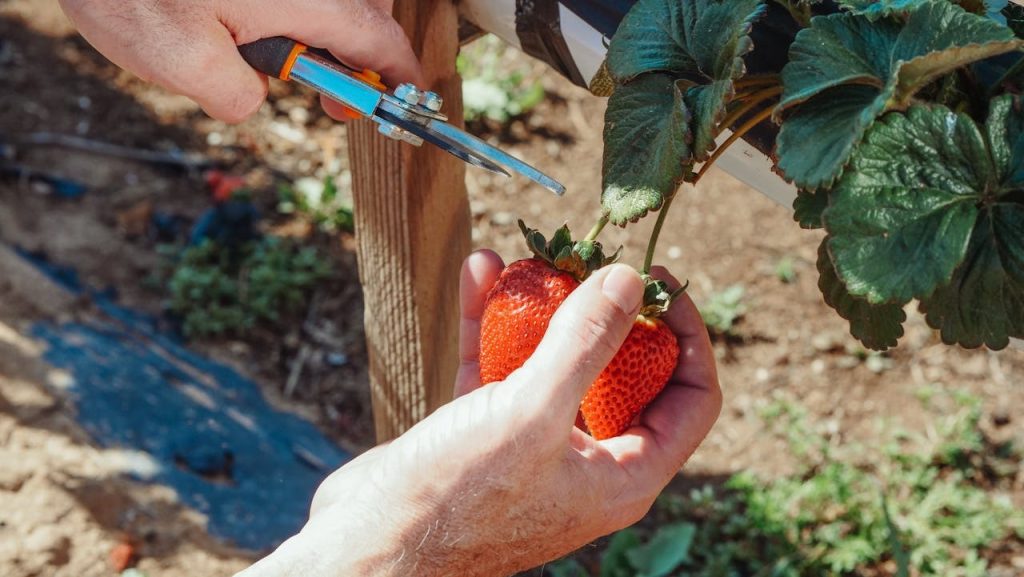
The most obvious sign of maturation is the color. The green fruit turns white, and then the plant starts producing anthocyanins, which give the berry its bright red color. The second most obvious sign? The aroma. Ripe berries have a strong, sweet and unmistakable fragrance.
Ripe berries also separate easily from the plant.
Harvest timing also depends on the variety of berries:
- June-bearing: Short but intense harvest period – usually 3 to 5 weeks – in late spring or early summer.
- Everbearing: Two smaller crops are ready to harvest in early summer and again in late summer/early fall.
- Day-neutral: Continuous fruiting throughout the season until frost (as long as temperatures are moderate).
Strawberries are best harvested in the early morning after the dew has dried but before the sun heats them. This ensures the fruit is cool and firm to maximize its shelf life.
Leaving strawberries on the plant for too long can lead to:
- Overly mushy and soft berries with a fermented flavor and extra-short shelf life
- Disease and mold spread, especially gray mold
- Pests, like slugs, birds and snails
- Decreased future yields – picking frequently during peak season encourages the plant to continue putting energy into the next round of flowers and berries
6. Dormancy and Overwintering
The final stages of the strawberry life cycle are dormancy and overwintering, both of which are critical for the plant’s survival and determining the next year’s yield.
While it may seem like the plant is sleeping, it’s actually quite busy. During this period, energy is focused on survival and preparation for the next spring.
Dormancy is when the plant stops active growth in response to the shorter days and consistently cool temperatures.
For June-bearing varieties, the flower buds for next year’s crop form inside the crown. Plants need adequate nutrition and water in the late summer and early fall to support next year’s growth.
Strawberries need a period of cold exposure to break dormancy and trigger high quality flowering in the spring.
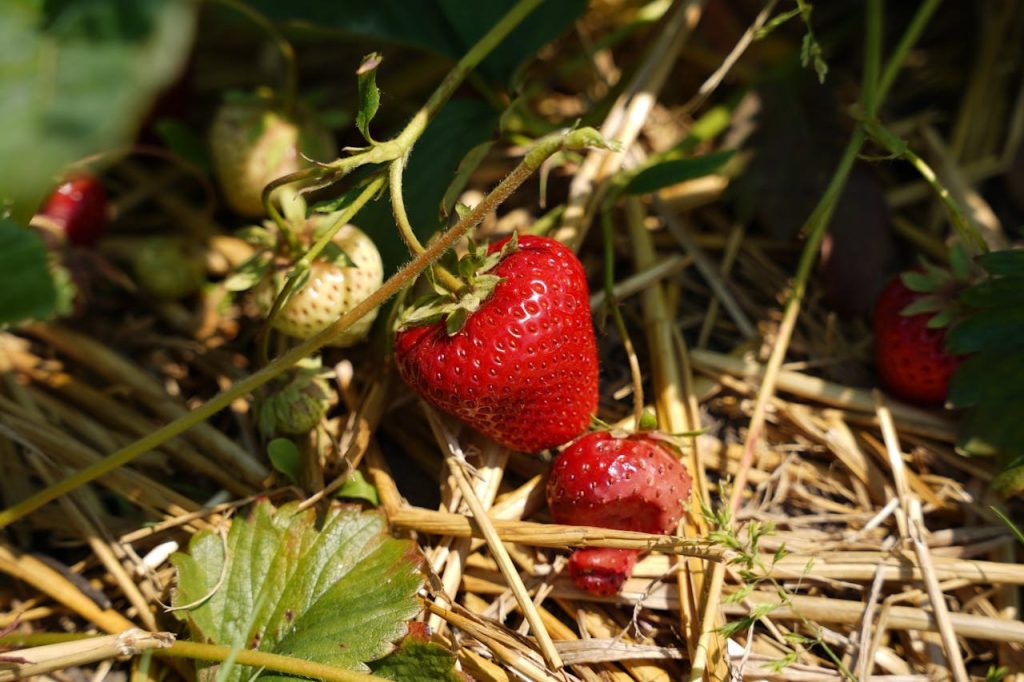
To protect and overwinter the crop, gardeners mulch their plants, usually with straw. Mulch moderates the soil temperature and helps the soil retain moisture.
It’s best to apply mulch after the plants have gone fully dormant after several hard frosts.
Once early spring arrives, the mulch is partially removed. Most gardeners leave some straw between the rows to act as a clean bed for the developing fruit.
Life Cycle Variations
The life cycle of a strawberry can also vary, depending on the variety of berry you grow.
June-bearing, everbearing and day-neutral varieties respond differently to day length and temperature. These responses dictate when the plant initiates flower bud formation and, ultimately, its harvest windows.
| Variety | Harvest Timing | Number of crops |
| June-bearing | Late summer/fall | One over a 3-4-week period |
| Everbearing | Late spring/early summer & fall | Two smaller crops |
| Day-neutral | Continuous | All season long |
The Takeaway
Strawberry plants go through a fascinating growth journey from seed to harvest. Now that you understand the strawberry life cycle, it’s time to start growing. It’s a challenge and will require patience, but the results are well worth the effort.
FAQs
What do strawberry plants look like?
Strawberry plants have green, serrated leaves with three leaflets and a central crown from which roots and shoots grow.
These plants produce white flowers with yellow centers.
Are strawberries perennial?
Yes. Strawberries are considered perennials, which means they come back year after year. That said, they’re considered short-term perennials. The plants can survive several years, but their fruit production declines over time.
How long do strawberry plants live?
The life cycle of a strawberry typically comes to a final end after 3-5 years. Peak productivity usually occurs around years two and three.
How do strawberries reproduce?
Strawberries can reproduce via seeds and runners. Runners are the primary method for spreading.