Companion planting with carrots is easier than you think. I’ll save you the trial and error by sharing my experience and some tips for planting to maximize pest control and harvest.
The first year I grew carrots, I planted them alone in a tidy little row. I added compost, watered regularly and waited. What I got was a patch of stunted roots and a carrot rust fly infestation that destroyed half my harvest. The other half? Little nubs of carrots. Great for a single salad.
I could have done a lot of things to prevent this outcome, but one of the simplest and most effective would have been companion planting.
Companion plants help each other out, whether that’s confusing pests, sharing nutrients or just making better use of space. And it turns out carrots, for all their reputation as a finicky, slow-to-germinate crop, are actually fantastic team players once you know who to put next to them.
Why Companion Planting Matters for Carrots
Carrots have a few quirks that make them perfect candidates for companion planting.
- They’re a root crop, which means most of their real estate is underground and out of sight.
- Their foliage is light and feathery, so they don’t steal sunlight from neighbors.
- Their roots dig deep, 8 to 12 inches down, which means they’re pulling water and nutrients from a different layer of soil than shallow-rooted vegetables.
The catch is that carrots germinate slowly, sometimes taking up to three weeks to show any sign of life. And during that stretch, weeds can take over a bed before a single carrot seedling even breaks the surface.
They’re also a magnet for carrot rust fly, a pest that can ruin an entire harvest if left unchecked. So the right companions are not only nice to have, but they’re doing real work: marking rows, suppressing weeds, masking scent from pests and even loosening compacted soil so tender carrot roots can grow straight instead of forked and twisted.
So, which companions are the “right” ones?
What Can You Plant with Carrots? The Best Companion Plants to Try
Onions, Leeks, Chives and Garlic
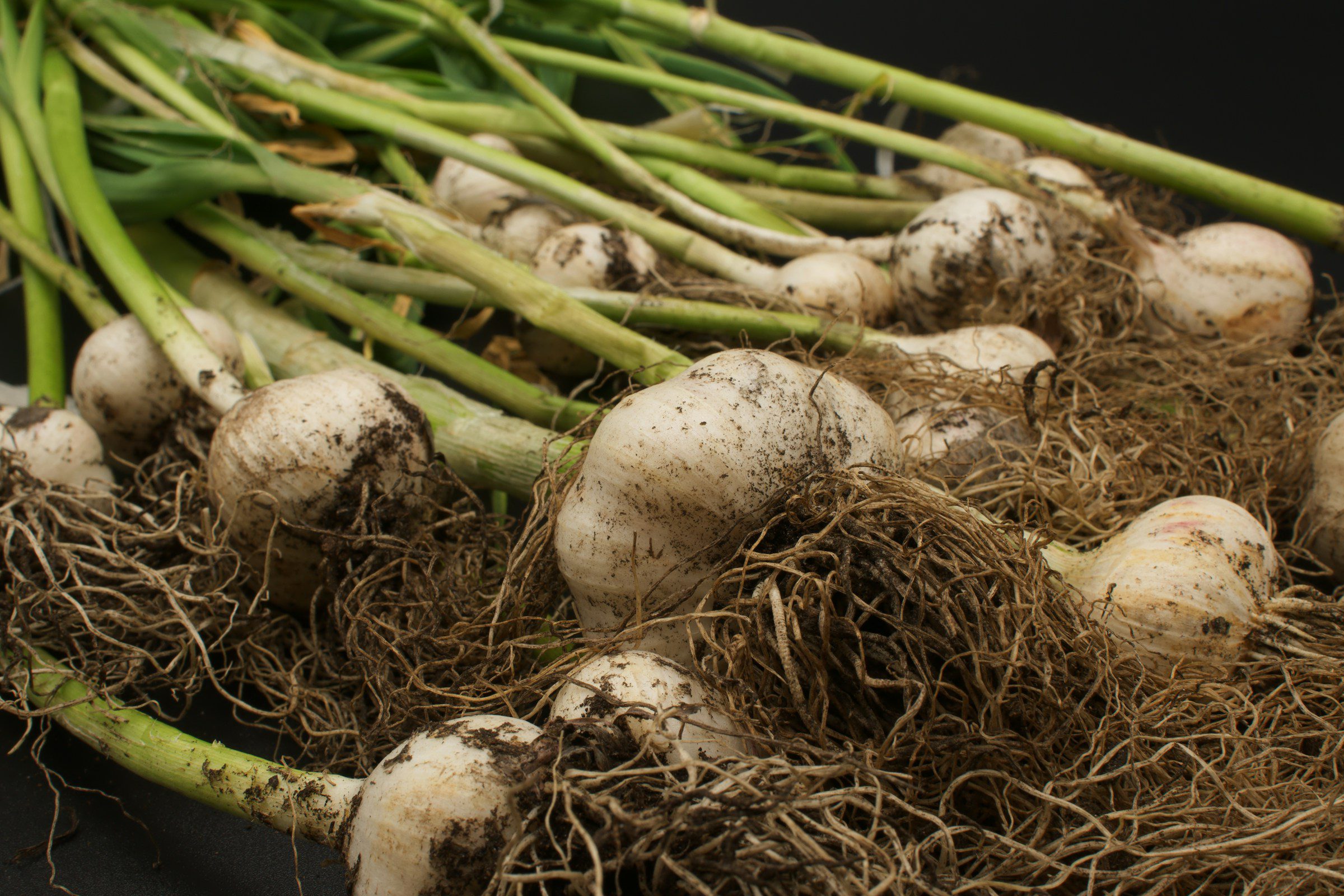
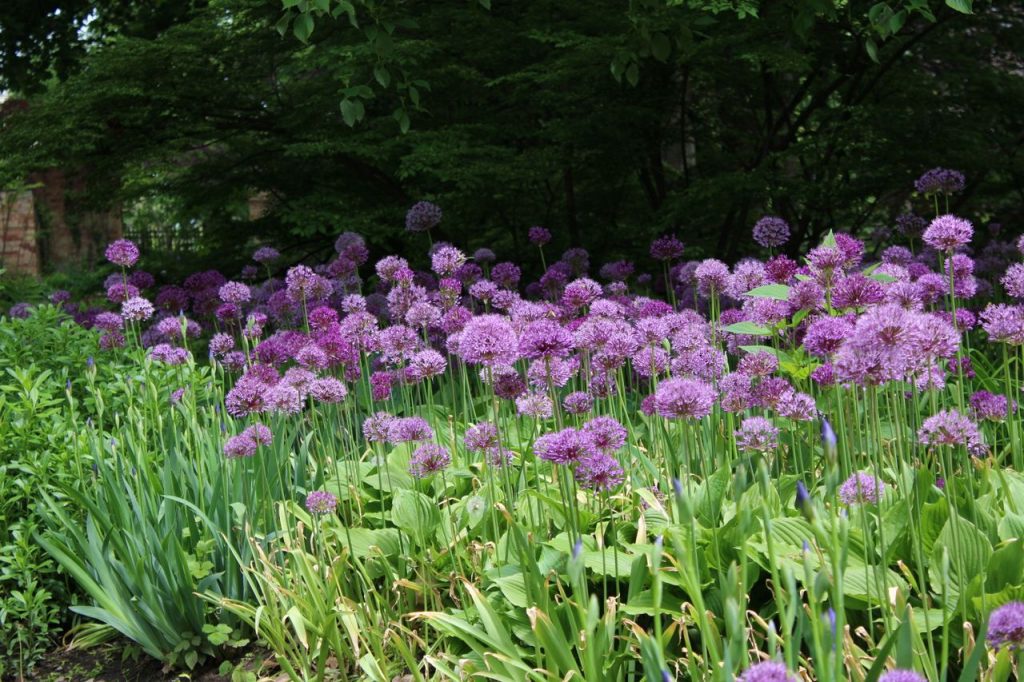
If there’s one pairing that comes up again and again in old gardening books and modern permaculture blogs alike, it’s carrots and alliums. The logic is simple: carrot rust flies find carrots by scent, and the strong, pungent smell of onions, leeks, garlic or chives throws them off the trail.
As a bonus, it works both ways, since carrots can help confuse onion fly, too.
I started interplanting onion sets between my carrot rows the season after my rust fly disaster, and the difference was noticeable by midsummer. I didn’t get a completely pest-free harvest (nothing is that magical), but the damage was a fraction of what it had been.
Garlic is especially handy if you plant it in fall, since you harvest it in early summer right around the time your carrots need more room to stretch out.
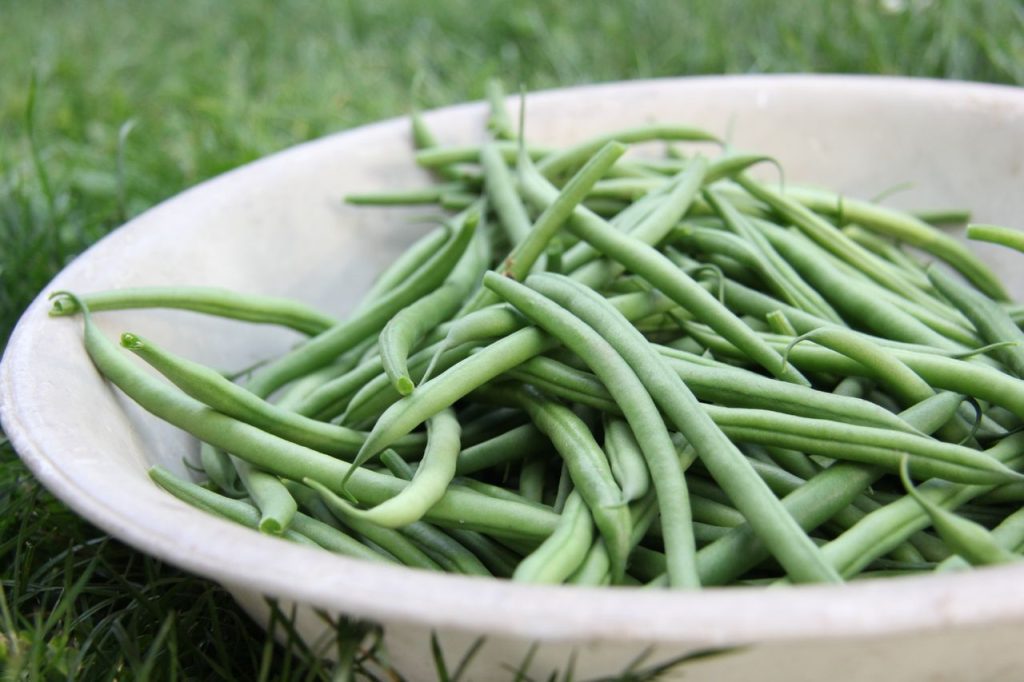
Peas, Bush Beans and Fava Beans
Legumes are famous for fixing nitrogen in the soil, which benefits carrots since they’re moderate feeders that appreciate a little extra fertility without going overboard (too much nitrogen, ironically, can cause forked or hairy carrots).
Peas are a particularly good match because they share carrots’ love of cool weather, and if you trellis them on the north side of the bed, they won’t shade out your carrots at all.
Bush beans work well, too, especially since they mature faster than carrots do. I like tucking a row of bush beans between carrot rows in spring, since I can harvest the beans and clear that space just as the carrots are really starting to bulk up.
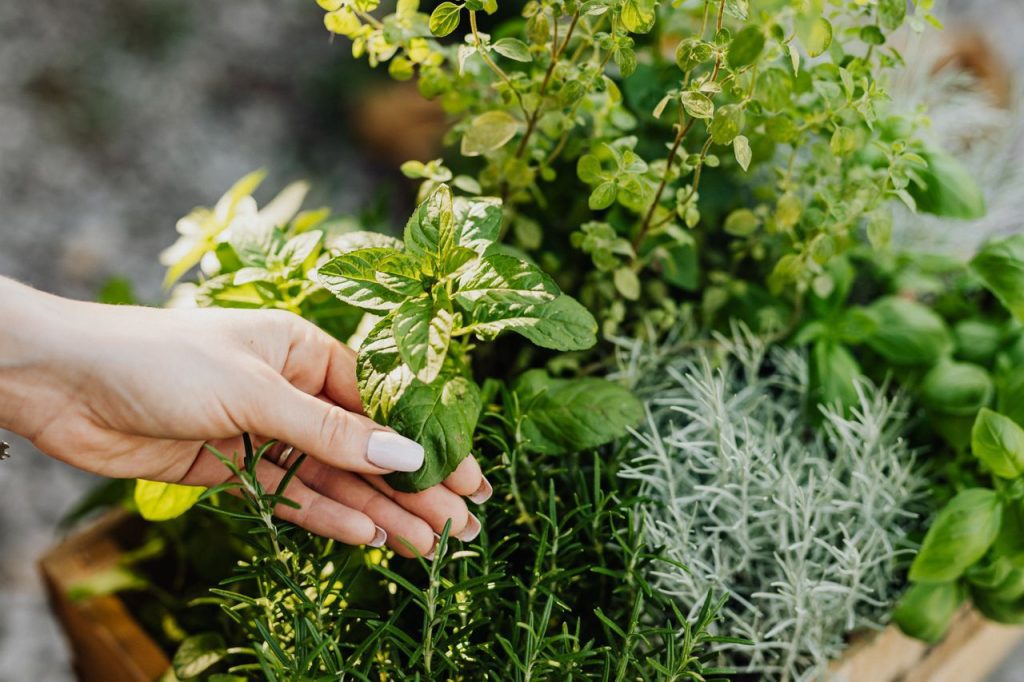
Aromatic Herbs: Rosemary, Sage, Thyme
Herbs can serve as pest deterrents and space-efficient border plants for carrots.
- Rosemary and sage both have strong scents that seem to throw off carrot rust flies, and since they’re perennials, they’ll keep doing this job year after year without replanting once they’re established.
- Thyme is a favorite of mine as a living mulch between carrot rows. It stays low, smothers weeds, and smells wonderful every time you brush past it while weeding.
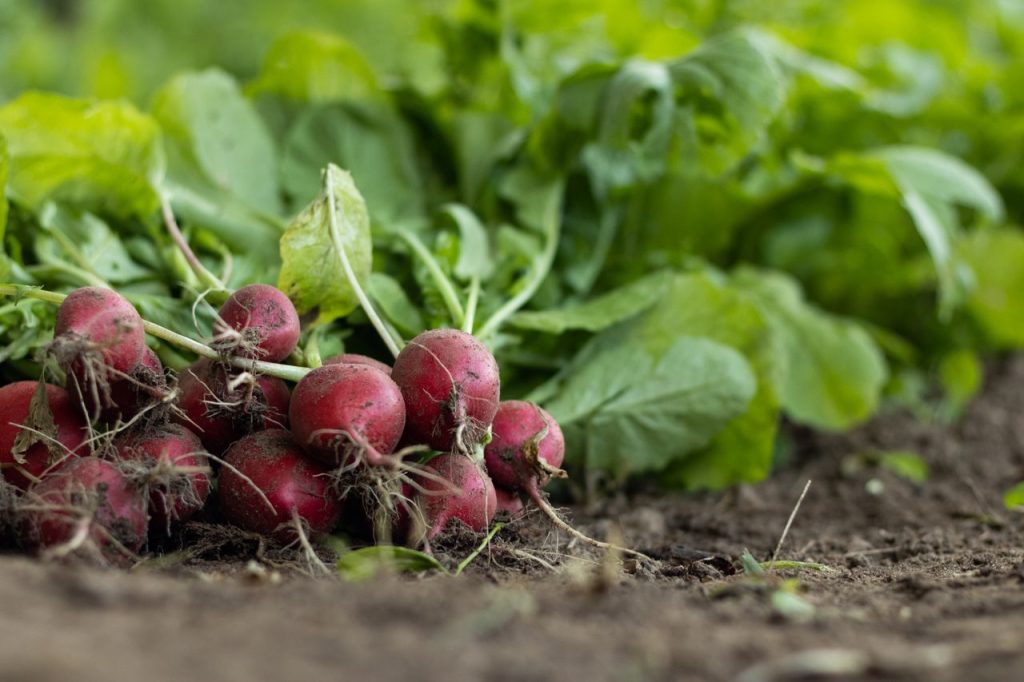
Radishes: The Perfect Row Marker
If you plant nothing else alongside your carrots, plant radishes. Because they germinate so quickly, usually within five to seven days, radishes pop up and mark exactly where your slow-to-sprout carrot seeds are, which makes weeding around them far less risky.
They’re harvested and gone within a month, long before carrots need the space, and as they grow, their roots gently break up the soil, making it easier for baby carrots to push through.
My mother-in-law taught me this trick years ago, mixing radish and carrot seeds together before scattering them down a row, and it’s become one of those small gardening habits I’ll never abandon. It genuinely saves so much guessing about where to weed in those early weeks.
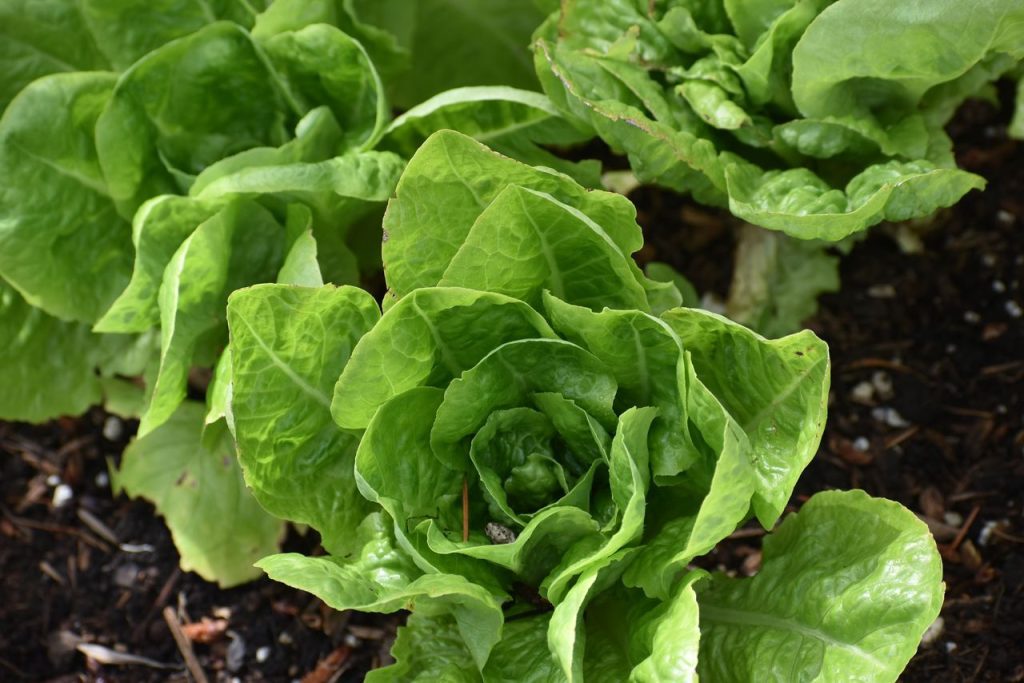
Lettuce, Spinach, and Other Quick Greens
Lettuce and other fast-maturing greens make great carrot companions for a similar reason to radishes: they’re up and out of the ground before carrots need the space.
They also provide a bit of shade that helps keep the soil cool, which carrots appreciate.
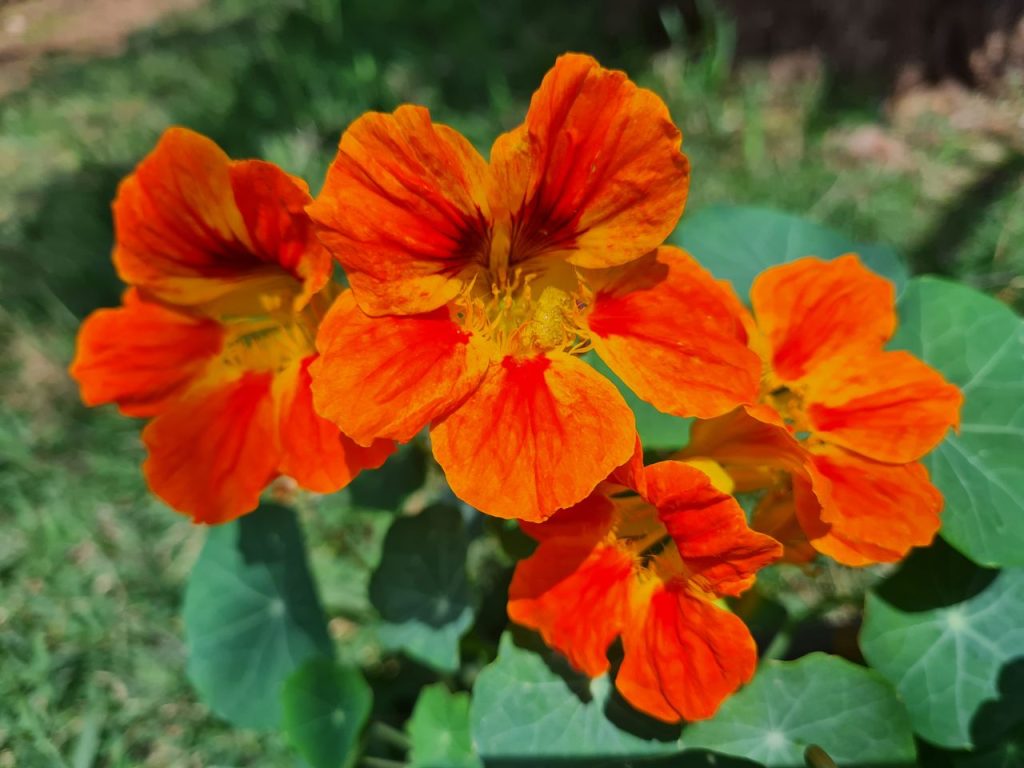
Tomatoes, Nasturtiums and Marigolds
Tomatoes and carrots can coexist nicely as long as you give them both enough room.
Nasturtiums are worth adding around the border of a carrot bed as a trap crop. Aphids will often prefer them over your carrots, sparing your crop the worst of the damage.
Marigolds are a classic companion for many vegetables, and while the evidence for repelling carrot rust fly is mixed, French marigolds do seem to help suppress root-knot nematodes in the soil.
What Not to Plant With Carrots
Knowing what NOT to plant with your carrots is just as important as knowing the best companions.
Because, let’s face it, not every pairing works out, and a few plants are worth actively avoiding near your carrot bed.
Here are a few of them:
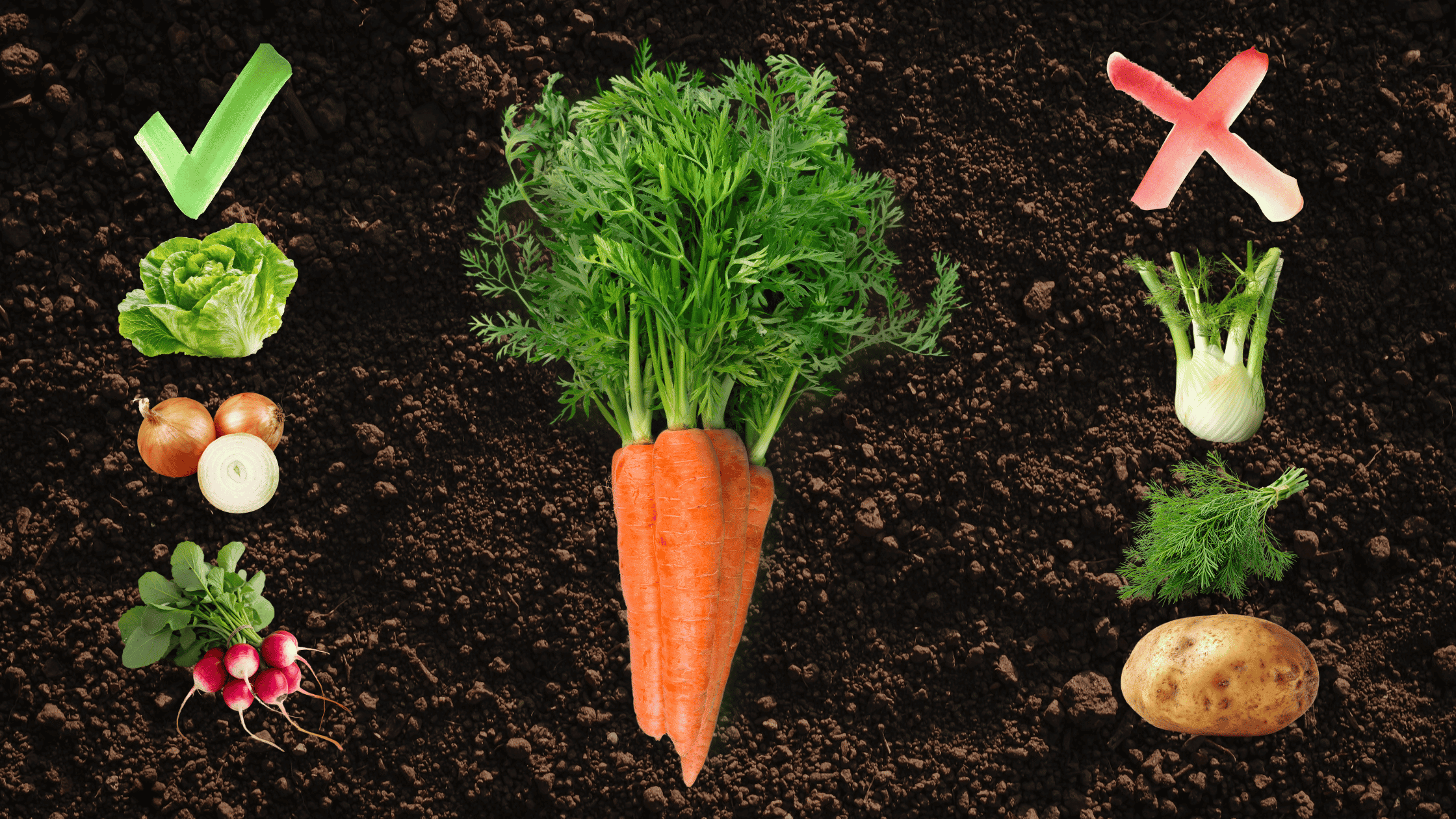
- Dill is controversial. It’s in the same family as carrots. Some gardeners swear it stunts carrot growth, while others say it’s perfectly fine as long as neither plant is allowed to flower and cross-pollinate. If you want to grow dill for its beneficial-insect-attracting flowers, it’s safest to keep it in a separate bed.
- Parsnips and celery share the same family as carrots and compete for the same nutrients while attracting the same pests, so doubling up in one bed just doubles your risk.
- Potatoes are best kept far away, too. Both are root crops competing for underground space. Plus potatoes need hilling, a process that can easily disturb or damage nearby carrot roots.
- Fennel is the one plant almost everyone agrees to avoid. It’s allelopathic, meaning it releases chemicals that inhibit the growth of many nearby plants, carrots very much included. Give fennel its own isolated bed and let it do its own thing far from the rest of the garden.
A Few Layout Ideas Worth Trying for Companion Plants to Carrots
You know which plants work well with carrots and which ones to avoid. But finding a good layout can be just as tricky.
One approach I’ve had good luck with is alternating rows: a row of carrots, then a row of onions or lettuce, then carrots again. It’s simple, and the scent confusion from the alliums seems to genuinely help.
Another option is a wide carrot bed bordered by chives or thyme, with lettuce or spinach tucked between the carrot rows for an early harvest before the carrots need the space to themselves.
If you’re working with a smaller garden or raised bed, even just edging your carrot bed with a ring of chives and a few marigolds at the corners can make a big difference.
Bringing It All Together – Companion Planting with Carrots
Companion planting with carrots isn’t a magic fix, and it won’t completely eliminate pests or guarantee a perfect harvest.
But pairing carrots with the right neighbors puts the odds in your favor, whether you choose alliums and herbs for pest confusion, radishes and lettuce for smart timing or legumes for a nitrogen boost.
My own carrot beds have gone from that first disappointing, pest-riddled row to something genuinely productive, mostly because I stopped treating carrots like a solo crop and started thinking of the whole bed as a little ecosystem.
Every garden is different, so don’t be afraid to experiment with a few of these pairings and see what actually works in your soil and climate. Take notes, adjust next season, and you’ll find the combination that works best for you.