Indoor gardening is so rewarding, but just like when building a raised bed outdoors, you need the right indoor plant containers to set your plants up for success.
Some planters are better than others for indoor use.
If you’re not sure where to start, you’ve come to the right place. In this guide, I’ll cover what matters most when choosing a container, material options, sizes and more.
What Matters Most When Choosing Plant Containers for Indoor Gardening?
Growing plants indoors, especially herbs and vegetables, comes with its own challenges. Unlike the outdoors, humidity and airflow are more limited inside your home. Fans and open windows can certainly help with ventilation and temperature control, but the containers you use can have just as big an impact.
When comparing your options, here are a few important things to consider.
Drainage
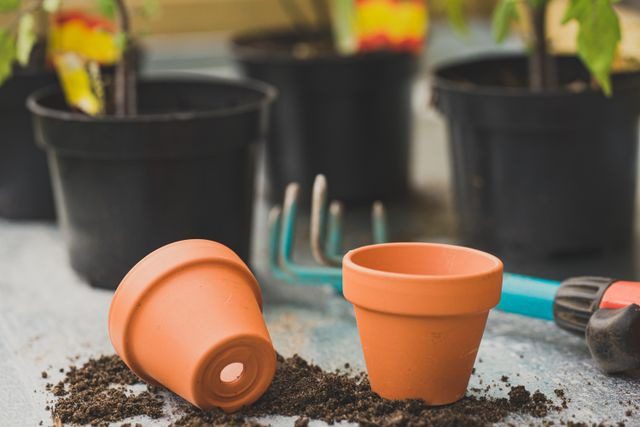
What type of drainage does the container offer, if any? Most herb and vegetable plants don’t like their feet wet. They prefer moist, well-draining soil that gives their roots room to breathe.
If you don’t want to suffocate your plants, choose containers with drainage holes in the bottom.
These holes allow excess water to drain away.
Some pots have a single central hole (common with terracotta), while others have multiple holes distributed along the base.
- Single holes are ideal for smaller containers or if the pot is made of porous material (like terracotta).
- Multiple drainage holes generally allow for better water distribution and have less of a risk of clogging. They’re the better choice for larger pots or plants that are really sensitive to overwatering.
As a general rule, I prefer pots with multiple drainage holes. They’ve always given me the best results for indoor plants.
Breathability
Holes keep your soil from getting overly soggy, but that’s not the only thing that contributes to drainage.
The pot’s material also affects moisture retention.
There are two main types of plant pot materials.
- Porous: Allows moisture to evaporate through the walls for rapid drainage. Terracotta and unglazed ceramic pots fit into this category.
- Non-porous: Retains moisture and relies entirely on the bottom drainage holes to drain water. Plastic, glazed ceramic and porcelain fall into this category.
Porous materials are great for Mediterranean herbs like rosemary, lavender, oregano, sage and thyme, which prefer drier soil. But for water-loving vegetables, non-porous options may be the better choice unless you plan to water more often.
Weight and Stability
If you’re planting deep-rooted or top-heavy plants like dwarf tomatoes, you need stable containers with weighted bases so that they don’t tip over.
What Plant Pot Materials Work Best for Indoor Gardening?
I’ve already touched on the porosity of the most common plant pot materials, but this is just one factor to consider when choosing your containers.
Let’s dive deeper into each material type.
Terracotta
Terracotta is made from a coarse, porous and iron-rich clay that’s shaped into a plant pot and baked at temperatures around 1,000°C to 1,150°C.
The word “terracotta” literally means “cooked earth” in Italian, which is a pretty accurate description. Because the firing stays low, the clay never vitrifies and keeps its porosity. The iron is what turns the pot orange in the kiln.
Along with moisture management, terracotta allows for better airflow and helps regulate soil temperature.
With proper care, these pots can last many years, and when they reach the end of their lifespan, they are biodegradable.
But remember, their porosity can be a double-edged sword. Generally, moisture-loving plants and herbs don’t do well in terracotta (unless you water more often).
But if you want to plant Mediterranean herbs like rosemary or lavender, then they’re ideal. Plus, they have a nice aesthetic. I like the D’vine Dev 6-inch pot for my herbs because it has a modern design and so far, hasn’t had any mineral buildup.
| Best for | Pros | Cons | Ideal Plants |
| Plants that are sensitive to root rot | High porosity and excellent aeration | Dries out quickly. Heavy and easily damaged. Mineral build-up can show over time. | RosemaryThymeLavenderSageOregano |
Glazed Ceramic
If you want containers that support plant growth and add beauty to your living space, glazed ceramic pots are a great option.
These containers have a smooth, glass-like finish that makes them easy to clean. But this also creates a non-porous surface, which means you’ll need drainage holes to prevent root rot.
They come in a wide range of sizes, but larger pots tend to be quite heavy. Many indoor gardeners sit their large ceramic pots on plant caddies. These wheeled plant stands make it easy to move heavy pots from one place to another.
| Best for | Pros | Cons | Ideal Plants |
| Kitchen countertops and visible living spaces | Excellent moisture retention. Heavy and stable. Easy to clean. | Non-porous, so drilled drainage is a must. | BasilParsleyLeafy greensChives |
Fabric Pots
If your goal is to grow veggies or root crops indoors, fabric pots can be an excellent option. They offer great breathability, so plant roots get plenty of oxygen.
You’ll find plenty of size options here, from five gallons to 20. Many have handles for easy movement, but a plant caddy can also be useful here.
To make your life easier, look for fabric pots that come with saucers, like this 5-pack from Wovnet.
While they’re not the prettiest option, fabric pots are hard to beat when growing larger crop plants, like dwarf tomatoes or bush beans. Just make sure that you have proper protection for your floors and a regular watering schedule to keep your plants healthy.
| Best for | Pros | Cons | Ideal Plants |
| Plant stands and dedicated indoor grow shelves | Excellent root aeration. Natural air-pruning prevents root binding. | Not the most aesthetically pleasing option. Requires a wide and high-walled saucer to catch runoff. | Dwarf tomatoesBush beansMini peppers |
Food-Grade Plastic
Many indoor gardeners start with plastic pots because they’re lightweight, long-lasting and really affordable.
Because they’re non-porous, these containers offer excellent moisture retention. Just make sure they have drainage holes to prevent root rot.
You’ll find options in all sizes and colors. Most come with saucers that fit perfectly around the base.
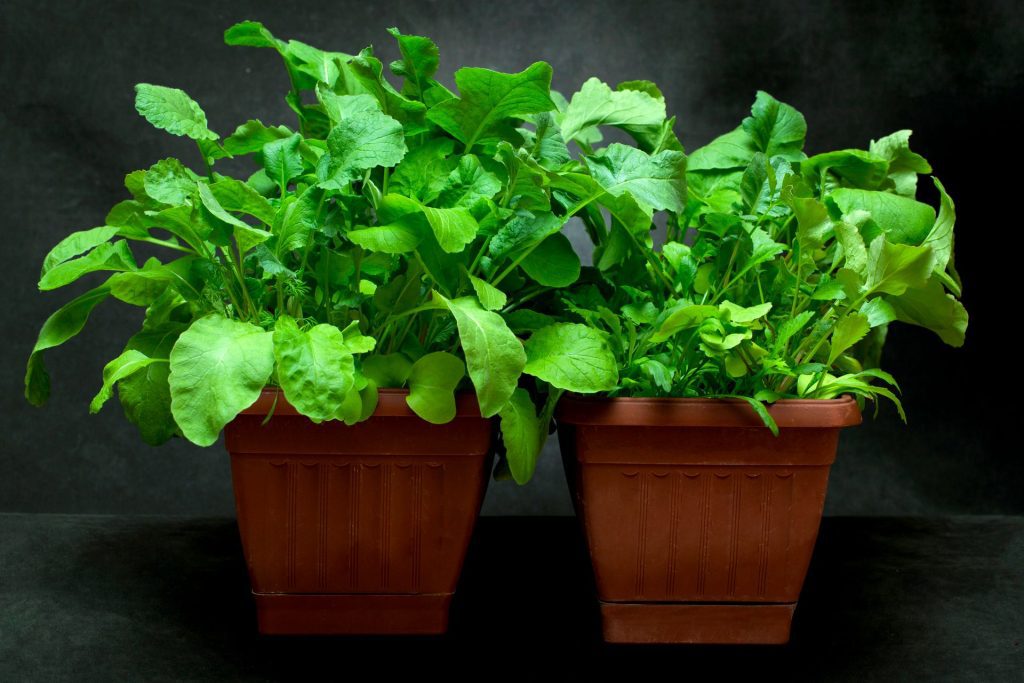
The great thing about this type of container is that you can grow just about any plant you want, from small microgreens to spinach greens and even larger pepper plants.
| Best for | Pros | Cons | Ideal Plants |
| Windowsills (with protection), weight-sensitive areas or shelving units | Lightweight and highly durable. Great moisture retention. Affordable. | Low breathability. Poor quality plastics can degrade or leach over time. | SpinachLettuceRadishesScallionsMicrogreens |
Wood
Although it’s not as popular as other options on this list, wood containers are available for indoor gardening.
Typically, they’re reserved for herb gardens that sit on windowsills. They’re usually lined with plastic to prevent leaks and rot. You’ll still need a saucer to catch water runoff and to ensure that your planter has drainage holes.
| Best for | Pros | Cons | Ideal Plants |
| Sill gardens or wide ledge setups. | Naturally beautiful. Provides excellent insulation for soil temperature stability. | Very heavy when wet. Requires waterproof liners or trays to prevent leaks or wood rot. | Mixed herb gardensStrawberriesSalad greens |
These are the top container material options for indoor gardening. Experiment with different types to see which ones work best for your setup. You may find that a mix of containers helps you finally achieve the indoor garden you’ve always dreamed of.
Specialized Indoor Container Systems
Along with the options I’ve covered above, you’ll also find specialized indoor container systems, such as:
Self-Watering Containers
You may have seen these types of containers in stores like Home Depot or your local nursery. They’re convenient, but not ideal for very large plants.
These containers use a bottom reservoir and a wicking mechanism to draw moisture up into the soil as plants need it.
The main and obvious advantage here is that these containers reduce the need to water frequently. They also help prevent runoff spills onto your furniture.
I prefer to reserve these containers for my thirstiest crops with serious moisture needs, like tomatoes, basil and leafy greens. They don’t pair well with Mediterranean crops or those that prefer drier soil, like thyme, rosemary or lavender.
Vertical and Wall-Mounted Systems
Vertical plant towers and systems like the VEVOR hydroponic tower help you maximize the vertical space in your home to grow plants.
Some have built-in grow lights, but those that don’t can easily be placed under a hanging light system to maximize growth and yields.
This type of setup will save you valuable countertop and table space.
The “Pot-in-Pot” Method
If you prefer the look of decorative pots but don’t want to drill drainage holes, the cachepot (or pot-in-pot) method may be a great option for you.
Here’s how it works:
- Place your plant directly into an inexpensive plastic nursery pot with drainage.
- Slip this pot into a decorative, non-draining outer sleeve (cachepot).
Another big advantage here is that there’s less worry about leaks or spills. Plus, you can easily remove the inner pot to water and fully drain in the sink before you put it back into your decorative display.
What Size Container Should You Choose?
The container’s depth and volume are just as important as the material. You’ll find options for any type of herb, microgreen or vegetable you want to grow.
Use this mini guide to help you find the right size.
- 2”-4” depth: Microgreens, baby radishes or wheatgrass, etc.
- 6”-8” depth: Cilantro, parsley, chives, loose-leaf lettuce, green onions, spinach, arugula, etc.
- 8”-18” depth: Basil, mint, rosemary, thyme, Swiss chard, kale, sage, oregano and most other herbs.
- 10”-12” depth: Dwarf tomatoes, compact peppers, strawberries, bush beans, etc.
Extra Accessories That Will Make Your Life Easier
If you really want to make your indoor garden a success, I highly recommend investing in a few accessories.
You don’t need anything fancy, but it’s helpful to have a few tools that protect your surfaces or make it easier to move big pots.
Here’s what we use in our indoor garden:
- Deep saucers and drip trays. I cannot stress enough how much you need deep saucers, especially if you’re growing thirsty herbs or vegetable crops. You don’t want to skimp on your watering sessions because you’re worried about leaks or spills. We love these saucers because the black pairs well with anything and they come in a variety of sizes and packs.
- Cork and felt pads. We place these underneath our saucers to prevent scratch marks or condensation marks on the floor. They’re great for protecting furniture and countertops, too. These plant “coasters” come in a variety of sizes to meet your needs.
- Plant caddies or wheeled bases. Large and heavy containers are tough to move without a little help. We pair these caddies with our three- and five-gallon containers, so we can easily rotate them towards sunlight or when we need to clean those areas.
Finding the right containers doesn’t have to be rocket science. Just choose the material that best fits your plants and a size that will allow the roots to spread out. Don’t stress if you don’t choose the right size initially. You can always repot in the future.