How do you know if spaghetti squash is ripe? Are there telltale signs, or is it just guesswork?
I’ll never forget the first spaghetti squash I pulled off the vine. It was still half green. The skin gave under my thumb like a ripe avocado, and when I cut it open, the strands were mushy and bland instead of the crisp golden noodles I’d dreamed about all summer. I picked it way too soon. And that mistake taught me more about squash than any garden book ever did.
Here’s the good news: you don’t have to guess like I did.
Spaghetti squash gives you clear signals when it’s ready. All you need is a little know-how about when to pick spaghetti squash and what to look for. Pick too early and you get thin, watery flesh with almost no flavor. Pick too late and you risk frost damage or a squash that’s past its prime.
In this post, I’ll walk you through the real signs of ripeness, the tests you can run without a knife and the tricks that take the guesswork out of harvest day. I’ll also let you in on a secret: spaghetti squash actually gets better after it leaves the vine, as long as you cure it right.
What You Need to Know About Spaghetti Squash Maturity
Spaghetti squash is a long game. Most varieties need between 85 and 100 days from the day you plant the seed to the day it’s ready to leave the vine, or about 50 to 60 days after pollination if you count from the flower instead.
This is a full-season crop. It needs a long stretch of warm weather to build size and sugar, and then a cool finish toward fall to firm the rind and deepen the color. Mark your calendar the day you plant so you have a rough target date. It won’t tell you the exact harvest day, but it gives you a window to watch closely as fall gets near.
What Happens As It Matures
As the fruit ages on the vine, a few things happen at once:
- The skin hardens and grows
- The color shifts from green to a rich yellow or cream, based on variety
- The stem dries out, turns brown and gets woody
- The vine starts to fade as the plant sends its energy to the fruit instead
- The squash gets heavier as the inside fills with flesh
- The spot where the fruit touches soil deepens to a darker shade
None of these changes happen overnight. That’s why a slow, steady eye on the patch beats a single glance the week before you plan to cook.
When to Pick Spaghetti Squash: The Signs to Look For
Sign #1: Skin Color Change
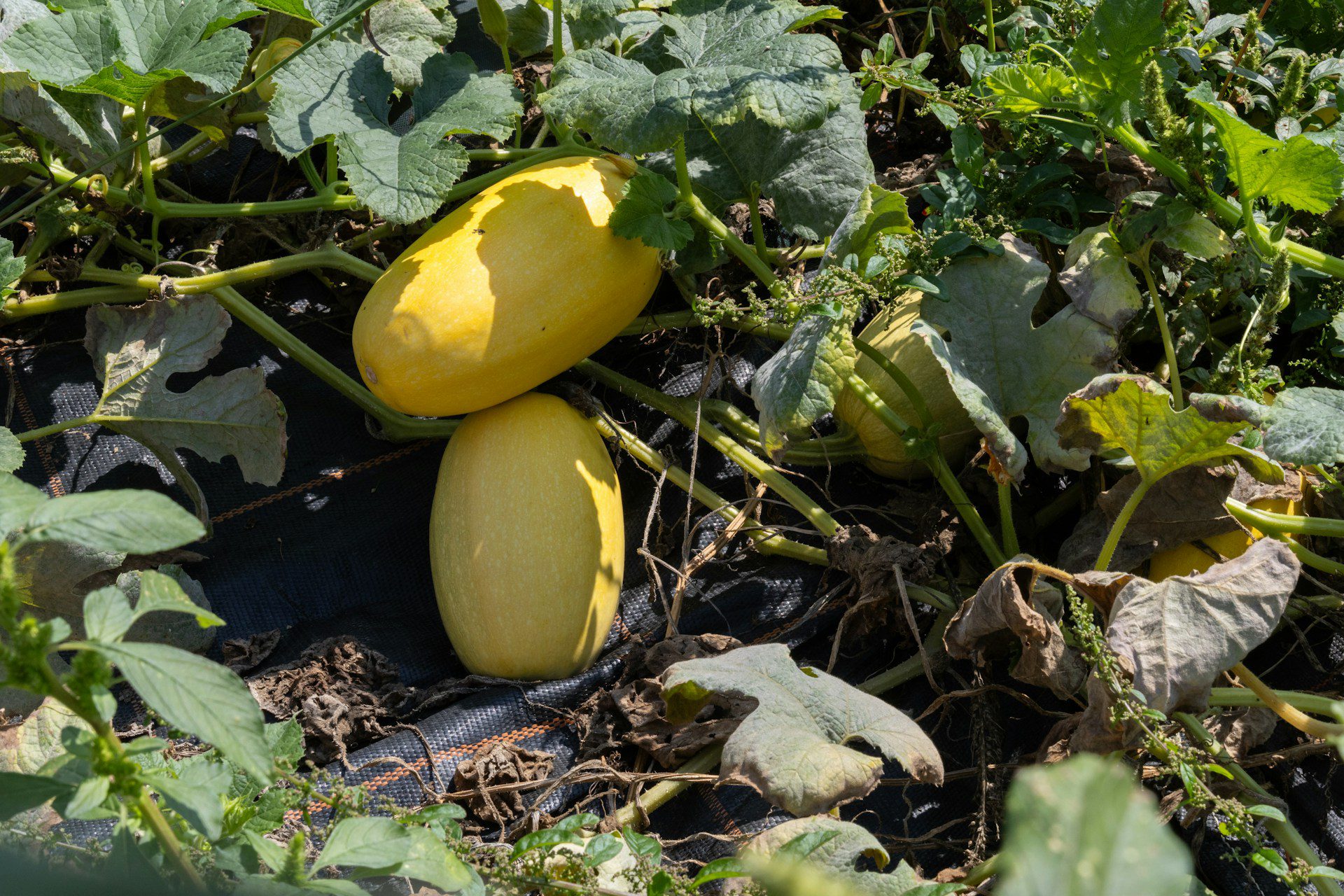
A squash that’s ready to harvest has a deep, even yellow color across the whole surface with no patches of green. Some varieties are more on the ivory or cream side instead of yellow, and that’s fine, too, as long as the color stays uniform and rich rather than pale or washed out.
Standard yellow spaghetti squash should look like a school bus, maybe even darker with a hint of orange. Stripetti and other striped varieties are a special case: green stripes are just part of their look and don’t mean the fruit is unripe. What matters there is the background color, which should still shift from green to yellow even while the stripes stay put.
If you spot solid green anywhere on a standard yellow variety, that squash needs more time. Streaks or patches of green also mean “not yet.” Even a light green tint is a sign to wait another week and check again.
Sign #2: The Thumbnail Test (Most Reliable)
If you only remember one test from this post, make it this one. Press your thumbnail firmly into the skin to check for ripeness. Try a few spots: the stem end, the blossom end and the side.
A ripe squash won’t give at all. The rind won’t dent or pierce. It should feel closer to hard plastic than anything from a garden. An unripe one gives way under pressure or lets your nail poke through.
This test works no matter what color variety you grow, and you can run it right on the vine without any harm to the fruit. If your thumbnail can’t make a mark, that squash is ready. If it sinks in even a little, leave it be and check again in a few days.
Sign #3: Dry, Brown, Corky Stem
Like with so many other vining plants, the stem tells its own story. Early on, it’s green, flexible and still full of moisture because the plant feeds the fruit through it. As harvest time nears, the stem yellows, browns, then dries out completely and turns woody and corky. Some stems even crack or pull loose from the fruit once fully mature.
A green, pliable stem means the plant still has work to do, so it’s not quite ready yet. Brown, dry and corky means the plant considers the job finished and sent its energy elsewhere. A cracked, fully dried stem is a strong sign the squash is ready (maybe even a bit overdue).
Sign #4: Dull Skin Appearance
Young squash have a glossy, almost waxy shine to them. Then, as the fruit matures, that shine fades into a flat, matte finish. If your squash still shines like it just got a fresh coat of wax, give it more time. Once the surface looks set and dull rather than shiny, that’s another point in favor of harvest.
Sign #5: Sound Test
A ripe squash gives back a hollow, resonant sound. An unripe one thuds flat with no echo at all. This one takes a bit of practice to read, so treat it as a bonus check rather than your main method. Use it alongside the thumbnail test and color check for real confidence.
Sign #6: Vine and Leaf Condition
Toward the end of the season, the whole vine starts to fade. Leaves turn yellow, the vine wilts and the plant clearly shifts its effort away from foliage and toward the fruit. Don’t rely on this alone though, since disease and pests can also cause a vine to die back early. Use it with the other signs we just talked about. A healthy, green vine usually means the squash isn’t ready yet, but a dead vine by itself doesn’t guarantee ripeness either.
Sign #7: Ground Spot Color
The patch where the squash rests against the soil often develops its own color, separate from the sun-exposed sides. As the fruit matures, that ground spot deepens toward a rich orange or golden yellow. A pale yellow or white spot means it still needs time. This sign only applies if the squash actually sits on the ground rather than on a trellis, so treat it as a bonus clue rather than your main test.
Secondary Clues for Harvest Time
Size and weight can help too, though I wouldn’t lean on them alone. My first-year squash never got as big as the seed packet promised because my soil needed work, yet the fruit still ripened just fine.
Most varieties land somewhere between 8 and 12 inches long and 2 to 5 pounds, though some grow larger. A squash that feels heavy for its size usually has dense flesh inside. That’s a good sign, but don’t skip the thumbnail test just because the size looks right.
The calendar method works as a rough guide, too. Count the days from the plant date against the maturity window on your seed packet, and add extra weeks for transplants rather than direct seed. Weather throws this off constantly, since a cool summer stretches the timeline and a hot one shortens it. For this reason, I recommend treating the calendar as a rough marker and always confirm with the physical signs first.
One old trick gardeners have passed down for generations involves the small curly tendril nearest the fruit on the vine. When it dries and turns brown, that’s often a signal the nearby squash has reached maturity. It’s not always easy to spot, so use it as an extra clue rather than the final word.
How to Test Ripeness Without Harvest
You can check most of these signs without a single cut. Run the thumbnail test right on the vine, look over the color and stem, tap for the sound test, and lift the fruit gently to peek at the ground spot. Never cut into the squash itself just to check, since once you cut it, you have to harvest it no matter what you find.
As the season winds down, check your patch every three to five days, then switch to daily checks once frost threatens. Early hours work best since the light is cooler and the color reads true. I keep a small notebook by my garden gate and jot down what I see each visit. It sounds like overkill until the one year I nearly missed the window because I skipped a close watch for a week straight.
Frequently Asked Questions
What’s the most reliable way to tell if spaghetti squash is ripe? The thumbnail test wins here. You shouldn’t be able to pierce the rind at all.
Can spaghetti squash ripen off the vine? A squash close to ripe can firm up somewhat in warm storage around 70 to 75°F for two to four weeks, but it won’t match the quality of one left on the vine. A very young squash won’t improve at all, so use it right away.
How long can I leave ripe squash on the vine? One to two weeks past ripeness is fine if the weather stays dry with no frost in sight. Don’t push it too far though, since frost damage is a real risk.
What if my squash still has green on it but frost is on the way? Cut it loose right away. A squash that’s mostly yellow will still improve some once it’s off the vine. A very green one won’t store well, so cook it soon. Better an early harvest than a loss to frost.
Does color matter even if the thumbnail test passes? Yes, both signs matter together. A hard rind without a full color change might mean the outside hardened before the inside finished. Wait for both before you cut it loose.
Why is my squash still soft even though it turned yellow? It’s not fully mature yet. Color often changes before the rind fully hardens, so give it another one to two weeks and wait until the thumbnail test fails before you harvest.
The Bottom Line
A truly ripe spaghetti squash gives you three clear signals at once: a hard rind that fails the thumbnail test, a deep uniform color with no green left behind and a dry brown stem. Of the three, the thumbnail test is your most trustworthy method since it works no matter what variety you grow.
Keep an eye on the calendar too, since frost is the real enemy here. This squash won’t survive a hard freeze, so harvest before that first cold snap, even if a few fruits aren’t quite perfect.
When in doubt, harvest a little early rather than risk the frost. A slightly immature squash still gives you a meal. A frost-damaged one gives you nothing but compost. Trust the signs, run the thumbnail test and you’ll never end up with a sad squash like my first attempt.