If you’ve ever stood in your garden in October holding a bag of garlic bulbs, wondering whether you’re already too late to plant, you’re not alone. I’ve been there more times than I can count. When I first started gardening, I had no idea when to plant garlic. You’re probably feeling the same way, and honestly, it’s not your fault. The “right” answer depends on where you live, what kind of garlic you’re growing, and how much cold winter you can offer it.
Let’s sort it out together.
Here’s Why You Need to Know When to Plant Garlic
Garlic isn’t like tomatoes or beans, where a week early or late barely registers. The timing of when to plant garlic bulbs directly determines whether you end up with big, multi-clove bulbs or sad little single rounds that barely resemble garlic at all.
Timing matters for one main reason:
- Garlic needs a stretch of cold. Specifically, it needs roughly 4 to 8 weeks below 40°F to trigger something called vernalization.
That cold exposure is what tells the plant to divide into individual cloves instead of one solid bulb. Skip the cold, and you’ll harvest something that looks more like an onion than garlic.
This is the whole reason fall planting became the standard practice almost everywhere: it lets winter do the vernalizing for you, for free, while you sleep in.
How Garlic Actually Grows
When you understand garlic’s growth cycle, it’s easy to see why timing is crucial. The cycle is a two-act performance.
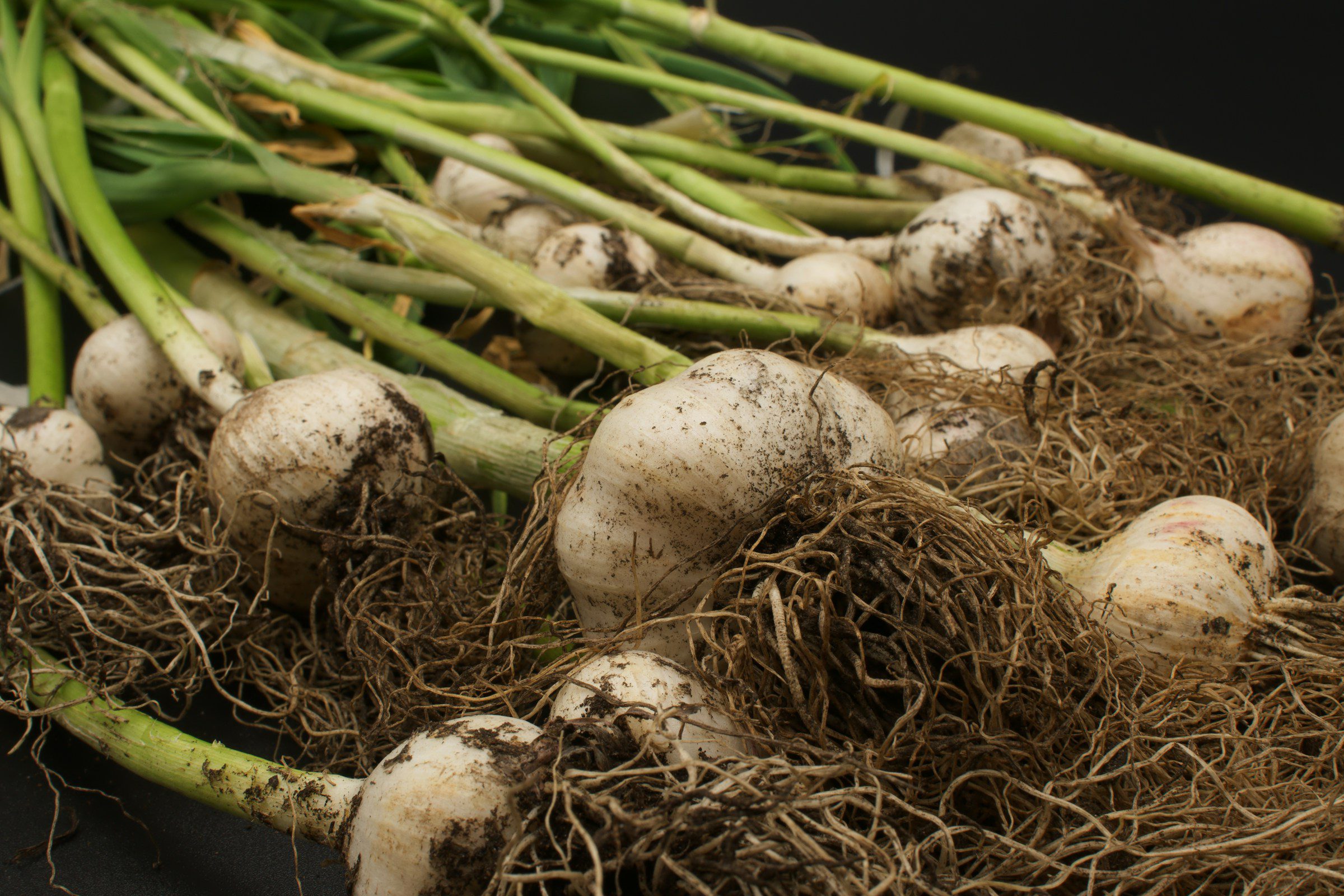
Act One happens underground during fall and winter. Plant a clove, it sends down roots, and that’s basically it for visible action. There might be a little green poking up, but that’s about it. At this stage, the plant is building a root system before the ground locks up for winter. This stage is invisible, but it’s the most important. Skimp on it, and everything that follows suffers.
Act Two kicks off in spring. As days lengthen and soil warms, green shoots shoot up fast. Each leaf that emerges corresponds to a future clove wrapper, so more leaf growth generally means a bigger, better-formed bulb. If you’re growing hardneck varieties, a curly flower stalk called a scape appears in early summer (snip it off and you’ll get bigger bulbs). By mid-to-late summer, the bulb finishes maturing and cures right there in the ground until you dig it up.
Knowing when to plant and harvest garlic really just comes down to giving the plant enough time to complete both acts before it gets too hot.
Fall Planting is the Tried-and-True Method
For the vast majority of home gardeners, fall is the answer to when to plant garlic. It’s not even close.
It’s the only planting time that works for my garden, and that’s after experimenting with the spring planting method that I’ll talk about soon.
Fall-planted garlic tends to produce bulbs two to three times larger than spring-planted garlic. That’s because it gets a full eight or nine months in the ground instead of just a few months in spring.
The garlic gets its cold period naturally (thanks, winter), develops a strong root system before going dormant and is ready to put all its energy into bulb formation as soon as spring arrives.
When Should You Plant in the Fall?
Fall may be the right season, but when exactly should you start planting?
The general rule of thumb is to plant garlic 4 to 6 weeks before the ground typically freezes hard in your area.
That window gives roots time to establish without pushing too much vulnerable green growth above ground before winter hits. Just remember that raised beds are more exposed and impacted by freezes differently than in-ground gardens, so you may need to adjust your timetable a little.
If you want to nail down your exact date, try one of these approaches:
- Work backwards from your first hard freeze. Look up your average first freeze date (when temps hit 32°F), and then count back 4 to 6 weeks. If your first freeze typically lands around November 15, you’re looking at planting sometime between October 1 and 15.
- Check your soil temperature. Garlic likes to be planted once the soil temperature drops to 50 and 60°F four inches down. A soil thermometer is really handy here!
- Watch for seasonal clues around you. When you’re planting spring bulbs like tulips and daffodils, or pulling out the last of your tomato plants, that’s usually a good signal that garlic season has arrived too.
Here’s a rough breakdown of timing by USDA hardiness zone:
| Zone | Plant Garlic | Typical First Freeze |
| 3 | Mid–late September | Mid-September to early October |
| 4 | Late September–early October | Late September–mid-October |
| 5 | Late September–mid-October | Mid-October–early November |
| 6 | Early–mid-October | Late October–mid-November |
| 7 | Mid-October–early November | Early–mid-November |
| 8 | Late October–mid-November | Late November–December |
| 9 | November–December | Rarely freezes |
| 10 | December–January, if at all | Rarely freezes |
Treat these as a starting point rather than gospel. Your specific yard, with its own microclimate, frost pockets and soil type, might run a week or two warmer or colder than the regional average.
I always say that you need to take the time to get to know your garden, and this is exactly why. I live at a higher elevation, so my planting time is slightly earlier than those who are at lower elevations, even though we’re in the same zone.
When to Plant Spring Garlic
Missed the fall window? Bought garlic on impulse at the garden center in March (yes, I have done this, and no, I’m not proud)? Spring planting is your backup plan.
It won’t produce bulbs as large as fall planting, but it’s better than not planting at all, right?
The golden rule for when to plant spring garlic is simple: as early as the ground can be worked, full stop.
Soil temperatures of 40 to 50°F are ideal because cold soil is your friend here, not your enemy. Depending on your region, that typically lands somewhere between February and April, and the earlier within that window you can plant, the bigger your bulbs will be.
Wait until May, and you’re likely to end up with disappointing results.
Don’t Skip the Pre-Chilling Phase
Since you’re skipping the natural winter cold period, you have to fake it. That’s where the pre-chilling phase comes into play.
Start 6 to 8 weeks before your planting date by storing whole, unpeeled bulbs in a paper bag (never plastic because they need airflow) in the refrigerator at around 40°F. Check on them weekly for sprouting or mold. A little sprouting is totally normal and nothing to worry about. Skip this step and you’ll likely end up with single, clove-less rounds instead of proper garlic bulbs.
Expect spring-planted garlic to run 30 to 50% smaller than those planted in the fall. You’ll also be harvesting later in the season (late summer or early fall, rather than the mid-summer harvest you’d get from fall planting).
Hardneck vs. Softneck: Does the Type Change the Timing?
Yes, actually, quite a bit.
Hardneck garlic is the pickier of the two. It needs a solid and genuine cold period to perform well, which makes it almost exclusively a fall-planted crop. Spring planting rarely works for hardneck types. But in exchange for that extra demand, you also get bigger, fewer cloves per bulb (usually 4 to 8) and a more complex, often spicier flavor (though it won’t store quite as long as softneck).
Softneck garlic is the easygoing sibling. It’s more flexible on timing, handles spring planting (with pre-chilling) much better than hardneck does and tends to thrive in warmer climates where hard cold is scarce. You’ll get more cloves per bulb, a milder flavor and notably longer storage life (sometimes 8 to 12 months). Softneck garlic is what we prefer to plant in our garden.
Elephant garlic, despite its name, is botanically a leek rather than true garlic. It’s the most flexible of the bunch. It doesn’t mind fall or pre-chilled spring planting and offers a milder flavor with less demanding cold requirements overall.
Here’s How to Get Your Cloves Ready for Planting
Don’t buy your seed garlic too far ahead of planting — two to four weeks out is plenty, especially if it’s coming by mail. And resist the urge to grab garlic from the grocery store: it’s frequently treated to prevent sprouting, and it’s often not even a variety suited to your climate. Seed companies, dedicated garlic farms, and local farmers markets are much safer bets.
When planting day arrives, separate your cloves just one to three days beforehand, not weeks in advance — this keeps them fresher and less prone to drying out or picking up disease. Leave that papery wrapper on each individual clove for protection, and save your biggest, healthiest cloves for planting (bigger cloves reliably grow into bigger bulbs). Smaller cloves can still go in the ground too; just expect a smaller harvest from them, or set them aside for the kitchen instead.
The Bottom Line
For nearly every home gardener, fall is when to plant garlic. Specifically, you want to plant 4 to 6 weeks before your ground typically freezes hard. If you’ve missed that window, spring planting with proper pre-chilling is a respectable plan B. Just budget for smaller bulbs and a later harvest. When in doubt, mid-October works well across much of the U.S.
Mark your calendar now, even if fall feels far away. Future you, standing in the garden with a bag of garlic bulbs, will be glad you did.